
Phu Quoc Special Economic Zone
Phu Quoc is entering a major development cycle. This research hub follows the legal framework, APEC 2027 infrastructure, capital deployment, new economic sectors and the island’s 2030 investment outlook.
Phu Quoc is currently a special administrative zone and already has an existing economic-zone framework. Recognition as a “Special Economic Zone” under Law No. 18/2026/QH16 requires a separate Government recognition process after approval in principle by the competent authority.
Vietnamese research hub →The real question is not the label. It is economic conversion.
PhuQuocHome does not treat a potential Special Economic Zone as a simple real-estate appreciation story. We focus on whether infrastructure, policy reform and capital can become a deeper, year-round international island economy.
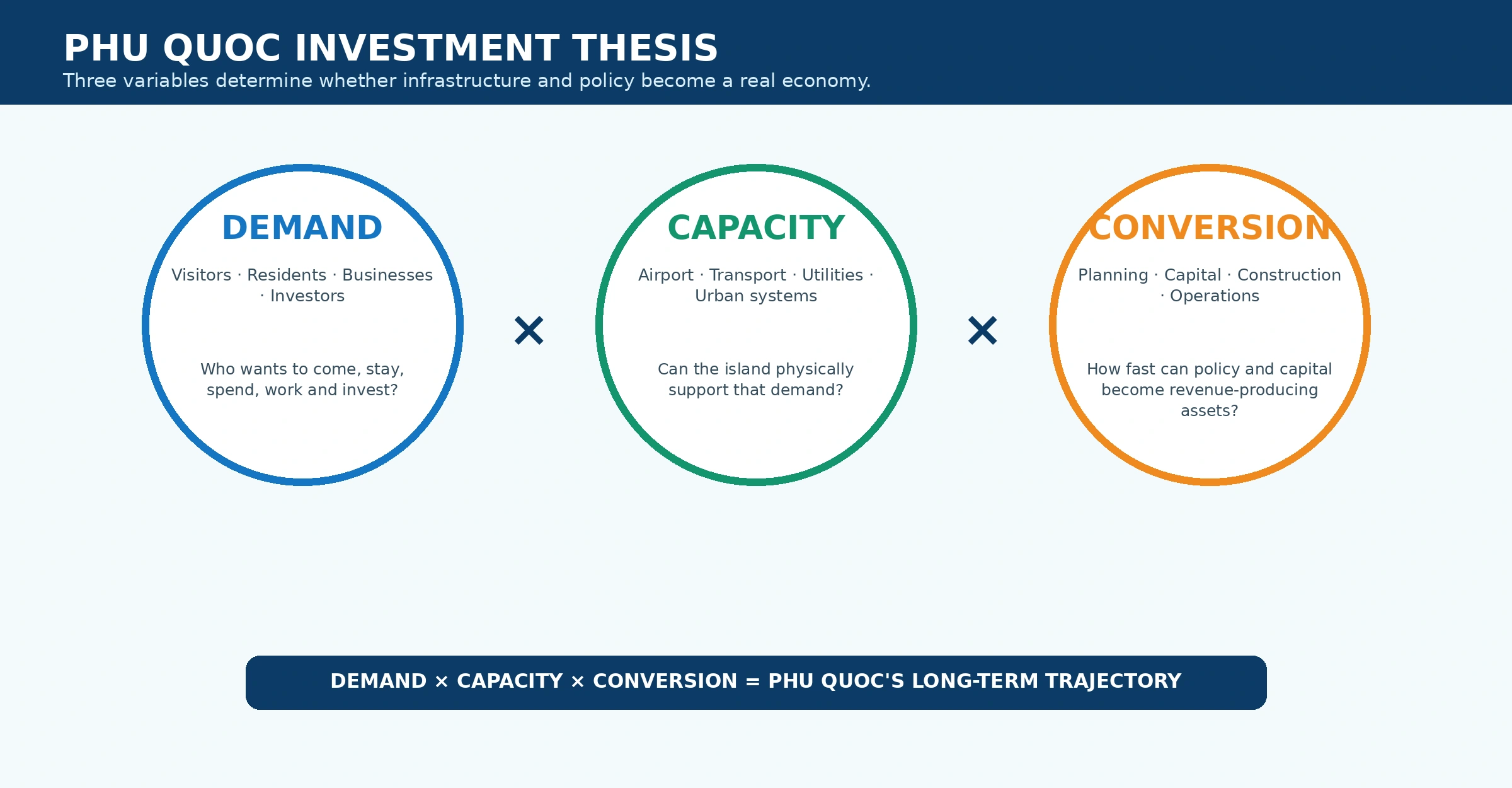
A strong starting position — but execution will determine the outcome
Phu Quoc already has island geography, an international airport, global tourism recognition, substantial registered investment and an exceptional infrastructure build-out ahead of APEC 2027. The next phase is about converting those assets into operating businesses, resident demand, recurring consumption and productive capital.
Six questions that shape the investment case
Planning & Governance
Why time, planning certainty and decision quality may matter more than headline incentives.
APEC 2027 & Infrastructure
Will the build-out create a lasting legacy economy after the event?
Strategic Investors
Why Phu Quoc needs productive capital and anchor investors, not just large commitments.
Consumption & Duty-Free
Can international traffic become a higher-value retail and service economy?
People & Long-Stay Economy
Can the island retain experts, families, managers and higher-income residents?
Real Estate & Operations
Which assets can capture actual demand — and which rely mainly on expectations?
From policy and infrastructure to real estate and 2030
The English series will be published progressively. Until each article is live, the cards below point to the relevant framework in this hub rather than unfinished URLs.
Planning, Time & the Cost of Capital
Why faster certainty can be worth more than a tax break.
View framework →From Tourism Island to International Island Economy
People, businesses and recurring demand.
View indicators →What Hainan Can — and Cannot — Teach Phu Quoc
Policy ecosystems, customs, duty-free and execution.
Research series →Lessons from Jeju
A successful island must retain people, not simply attract visitors.
View indicators →Capital Hates Waiting
What Batam can teach Phu Quoc about execution and time to revenue.
View framework →Duty-Free & the Consumption Economy
From airport shopping to destination retail and spend per visitor.
View monitor →Phu Quoc Real Estate
Which assets could actually benefit — and which could be left behind?
View monitor →What we are watching
We prefer measurable operating indicators to headline narratives.
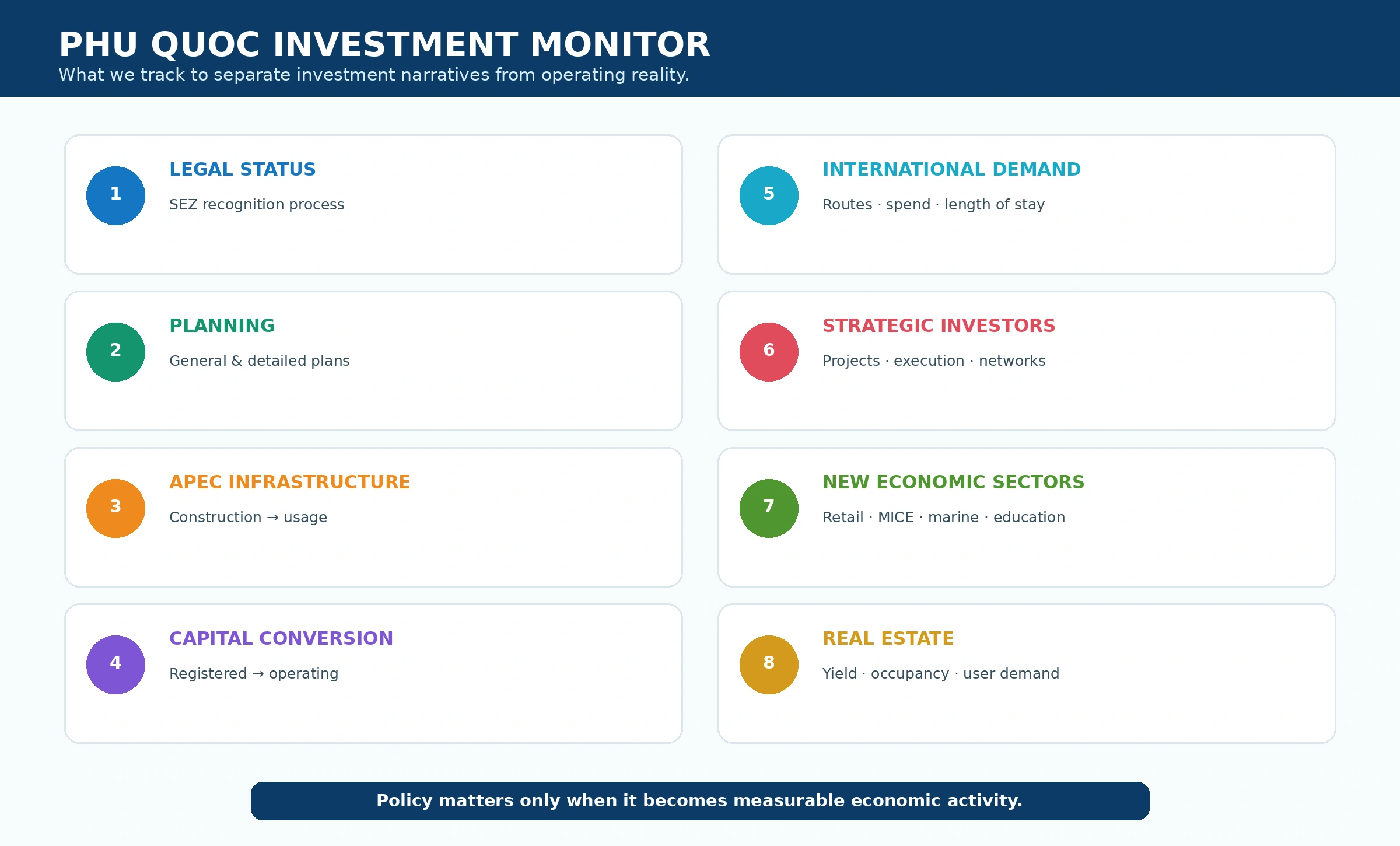
Three scenarios, not one prediction
Visitor growth is only one proxy. More important are international share, spend per visitor, length of stay, long-stay population, capital conversion, project operation rate, non-tourism revenue and real-estate yield.
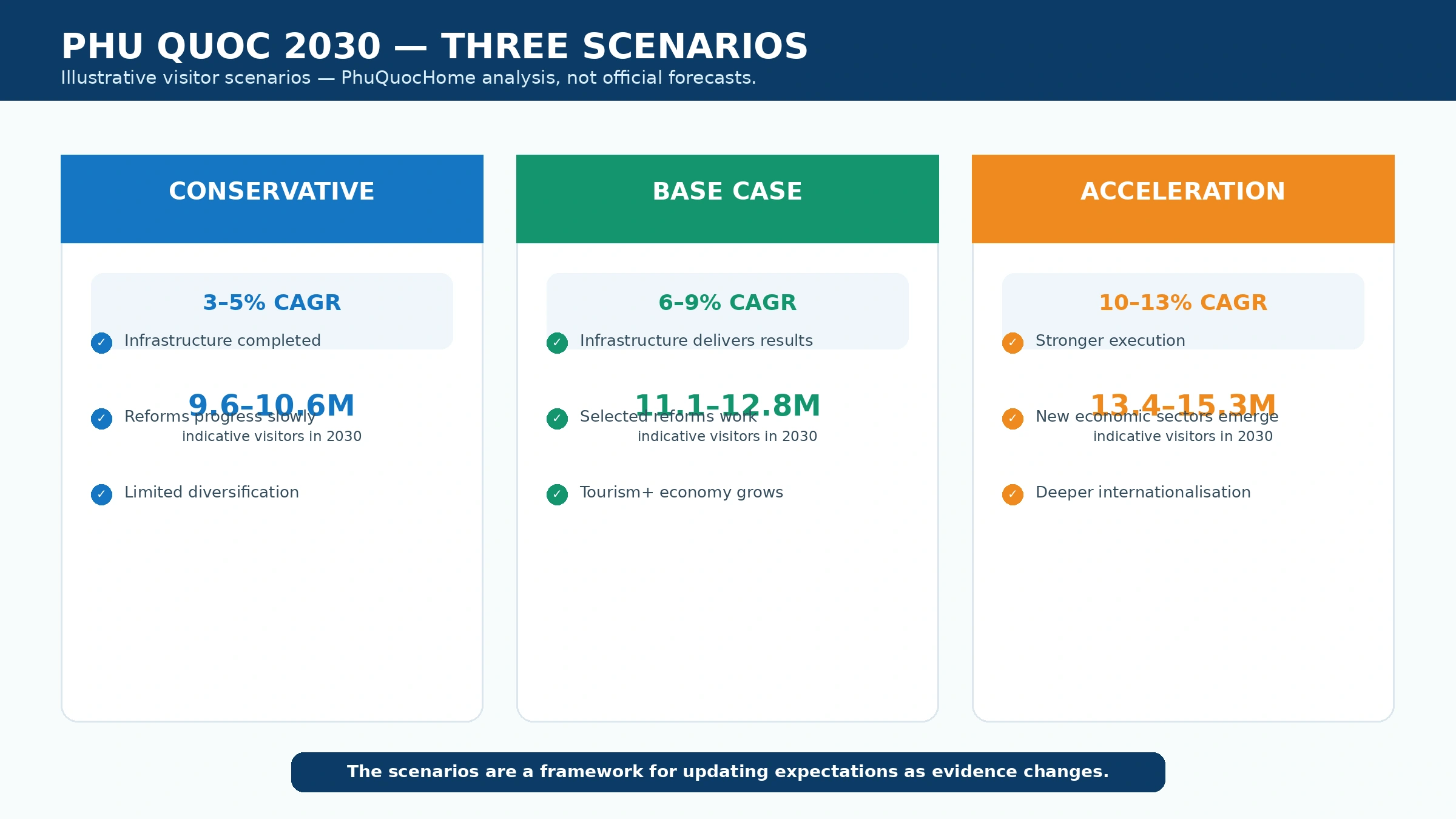
Constructive on long-term potential. Conditional on execution.
Value is created when policy becomes execution, infrastructure becomes usage, capital becomes operating assets, and visitors become consumers, residents and businesses.
A new international island economy in Vietnam is possible — but it must be built and measured.
Primary sources first
Legal framework: Vietnam Urban Development Law No. 18/2026/QH16, including Article 43 on Special Economic Zone recognition.
Tourism: Phu Quoc official portal — 8.3 million visitors in 2025, including 1.86 million international visitors.
Investment: Phu Quoc Economic Zone Authority — 326 projects in force, VND 508,660 billion registered capital and VND 31,603 billion disbursed in H1 2026.
APEC 2027: official Phu Quoc sources — 21 projects with total investment above VND 137,138 billion.
Analysis concepts such as Demand × Capacity × Conversion, Productive Capital and the 2030 scenarios are PhuQuocHome research frameworks, not official forecasts.